


By Jessica Herndon
One of the most exciting things about the Sundance Film Festival is having a front-row seat for the bright future of independent filmmaking. While we can learn a lot about the filmmakers from the 2026 Sundance Film Festival through the art that these storytellers share with us, there’s always more we can learn about them as people. We decided to get to the bottom of those artistic wells with our ongoing series: Give Me the Backstory!
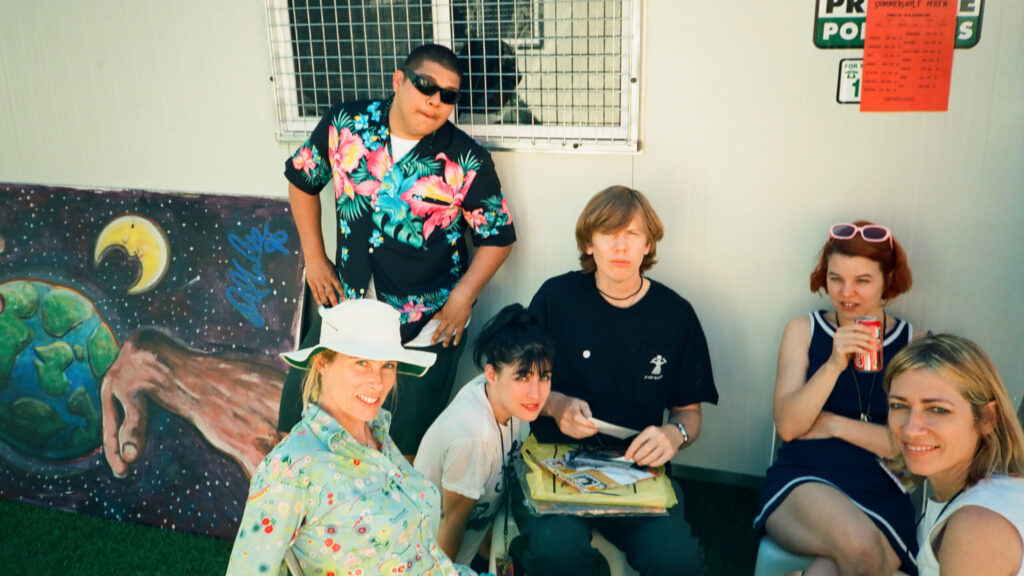
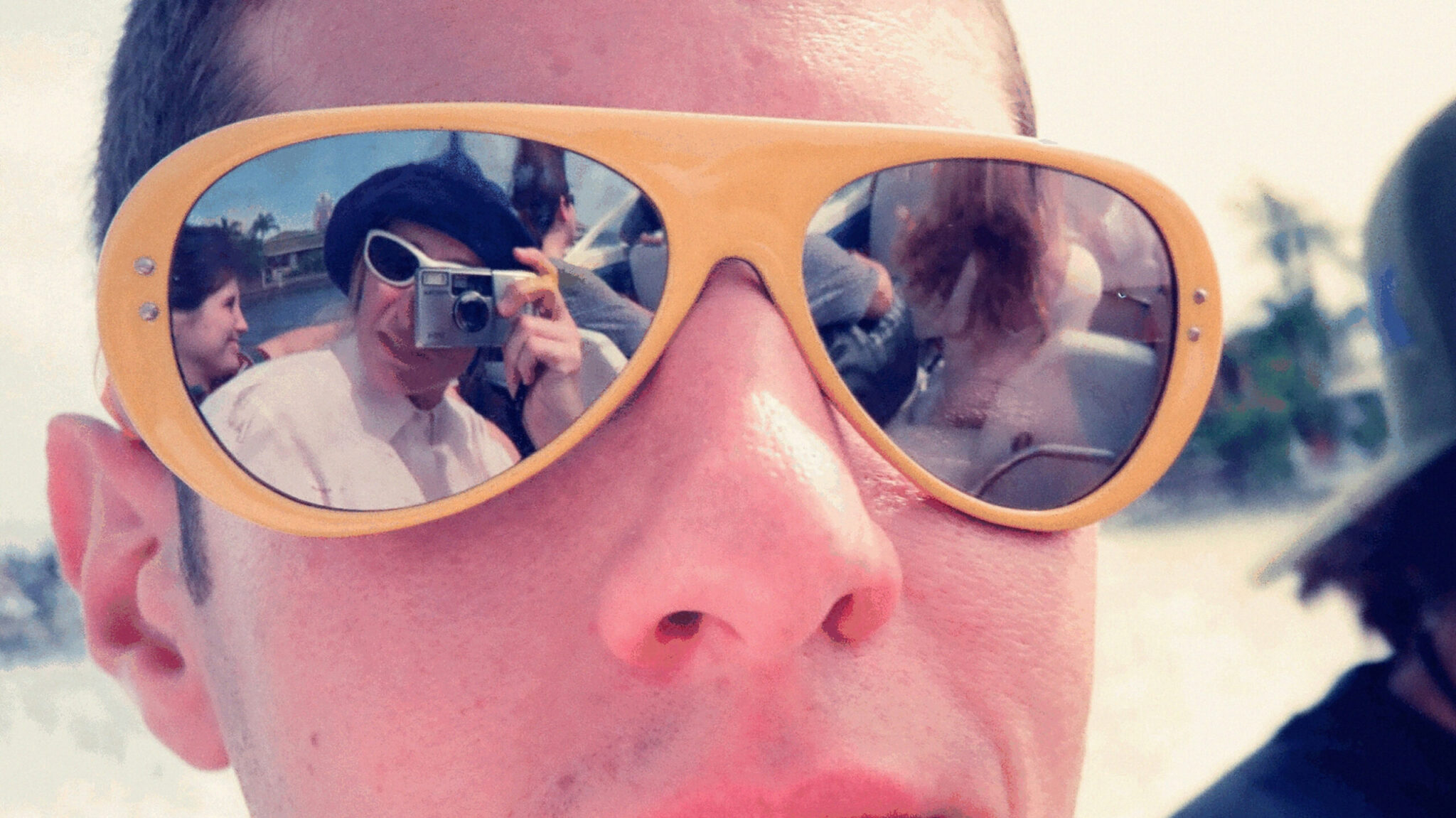
The year is 1995, and filmmaker Tamra Davis is fresh from directing Billy Madison, her third feature film. Davis and the Beastie Boys’ Mike D are fresh into their newlywed days as the filmmaker joins her husband during the Summersault indie music festival in Australia, where his band is set to headline alongside Sonic Youth, Foo Fighters, Pavement, Rancid, Beck, The Amps, and Bikini Kill. In love with making movies, Davis picks up her camera and films the ride.
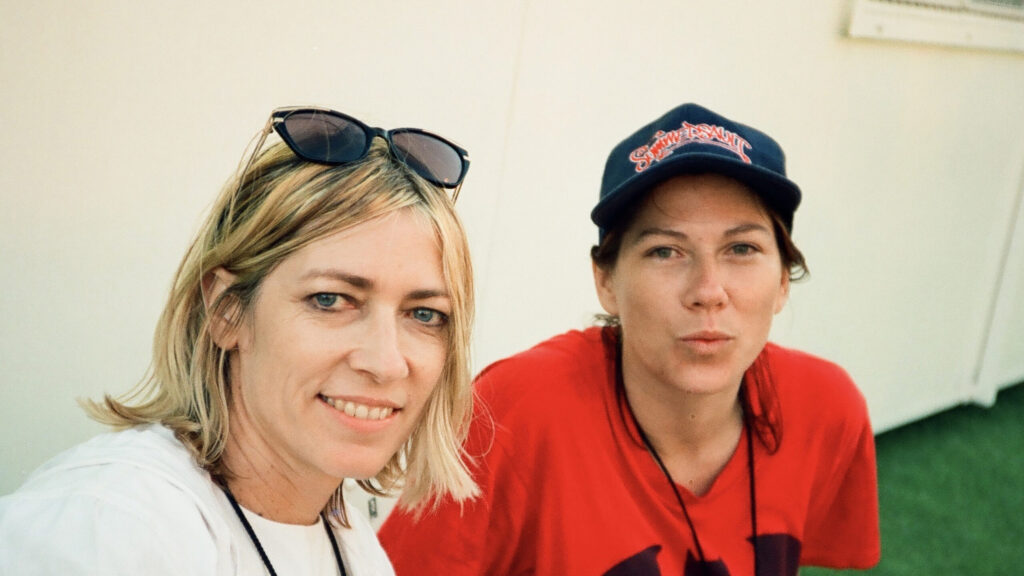
She shoots performances, backstage footage, and enlists Kathleen Hanna — you know the one: the Bikini Kill and Le Tigre frontwoman who was a pioneer of the Riot Grrrl movement — to conduct interviews with rock stars like Kim Gordon, Thurston Moore, and Dave Grohl. The all-access footage is raw and intimate — and Davis tucked it away for 30 years.
Davis found the footage — a box of videotapes — when she evacuated her home in January 2025 due to the Palisades fires. Premiering in the Midnight section at the 2026 Sundance Film Festival, The Best Summer showcases what Davis filmed. “Truthfully, I really don’t remember shooting it,” Davis admits. “At that time, I always had a camera in my hand. I was always filming. What I remember most, and is the best thing about the process, is that the film became my memory. It all came back as I watched things from my distant past flicker on my Hi-8 video screen.”
The Best Summer is a documentary that captures a moment in music history where cool bands came together to jam and have a good time. Through Davis’s lens — which has brought us CB4, Half Baked, Crossroads, Jean-Michel Basquiat: The Radiant Child (2010 Sundance Film Festival), and over 150 music videos for artists like Depeche Mode, MC Lyte, and Indigo Girls — we are invited into dressing rooms, on stage, and into the lives of icons whose influence has helped shaped music culture.
Below, Davis chats about what she hopes budding filmmakers take away when watching her film, why her movie feels especially relevant today, and how she hopes her personal POV inspires others to see the musicians in the doc as she saw them.

What was the biggest inspiration behind The Best Summer?
My biggest inspiration for this film was a simple desire to make a film. If you know me, you know I love making movies. I was frustrated with the current state of Hollywood. It reminded me of my early days, when opportunities were scarce. I learned that you don’t just wait around; you create your own opportunity. Finding this footage reignited that feeling. The possibility that I could shape it into a film sparked my creativity and pushed me to begin.
Describe who you want this film to reach.
As much as I love that this film is a huge memorabilia wet dream for anyone of my generation, the person I most want to reach is the aspiring filmmaker — the one who watches my film and thinks, I could do that. Of course, I’m always looking out for the girls, and I think the film shows the power of having a girl behind the camera. The intimacy and connection of my gaze allows the viewer to feel like it’s their POV. By revealing myself only in fragments, I hoped to transport the audience back to that moment and let them see these artists exactly as I saw them.
What was your favorite part of making The Best Summer? Memories from the process?
It’s true that a photograph can prompt a memory, but watching moving images of your own life feels like seeing a dream appear on the screen. The same was true for the artists. It brought back so many of their memories. When Adam Horovitz saw the film, he joked that I had reached deep into his brain and pulled out that obscure memory of the exercise class at the Indonesian resort.
What was a big challenge you faced while making The Best Summer?
Every day of making a film brings a new challenge, and just when you think you faced the biggest challenge on that project, the next one arrives, and now you have to face that. The first big question was: Is this even possible? With so many bands and so much music, I needed everyone’s approval. You never know until you try.
Why does this story need to be told now?
What struck me in the footage was its pure authenticity. These were real moments from a time before everyone had a camera. I was fascinated by the long takes in the footage where I shot an entire song in one take, and my eye just goes to what you would naturally look at, like watching a tennis match. By then, I had made more than 150 music videos, so I was pretty good at filming live performances.
The interviews also surprised me. They show you how funny and thoughtful the artists are, and the long conversations with Kim Gordon and Dave Grohl, left mostly unedited, lift the veil on who these icons really are. Today, interviews are often quick cuts and clipped soundbites. I love the feeling that you’re really getting to know somebody: the awkward pauses, the craft-service guy setting up the rider, the party in the next room. That’s what it actually sounds like to be backstage having a real conversation with somebody right before or after they’ve just played a show. It’s a conversation about who you are in real life versus your stage persona. It is so relevant today.
Films are lasting artistic legacies. What do you want yours to say?
I really love the idea that one person with a camera could make a movie on their own. As I watched the footage and realized I had also shot interviews alongside a concert film, that idea felt even more inspiring. That’s always been part of my identity — having no fear and just picking up a camera and filming what I saw around me. I hope this film shows that anyone can make a film, and that at its core, filmmaking is simply the filmmaker’s point of view and the world they choose to reveal.
Tell us why and how you got into filmmaking.
I grew up in Hollywood and Studio City. I loved movies, and I thought I might become an actress, but after watching a bunch of amazing directors’ work, I realized I wanted to direct. When I was 19, Francis Ford Coppola told me to go to film school — so I did.
If you weren’t a filmmaker, what would you be doing?
My safe answer is a teacher. I love inspiring people. It’s the same thrill I get when I show a movie to people, and I feel like I’ve entertained or inspired them.
I also think, especially after a decade of working in television, that I would be an exceptional corporate leader. A director has to have a strong vision, lead a team, inspire people to do their best job and feel good about their work, stay on budget, and deliver the strongest possible product. The only issue is that I need to be passionate about what I am working on. That’s why I never did commercials. My creative drive is fueled by my passion for the project. I think I am the biggest fan of the artists in this film.
What is something that all filmmakers should keep in mind to become better cinematic storytellers?
It’s a privilege to have an audience watch your film. Don’t waste their time. Tell them a story. Show them why you felt it was important for them to see it. Did you make the audience feel something?
Who are your creative heroes?
Alice Guy, Maya Deren, Alfred Hitchcock, Peter Bogdanovich, Polly Platt, Elaine May, Jean-Michel Basquiat, Zara Hadid, Spike Jonze, Radiohead, The Beatles, the Beasties, and my kids, Davis and Skyler. They constantly show me that creativity thrives when you’re not afraid.
What was the last thing you saw that you wish you made?
I’m going to go big and say One Battle After Another. I wish I could make gigantic movies like that with incredible acting, genius action sequences, and exceptional storytelling. I can’t wait to see Hamnet. I’m sure I’m going to feel that way. I also loved Nouvelle Vague. I’m such a huge fan of Breathless. It looks so fun to do a movie about one of your favorite movies, and I love stories about the behind-the-scenes of movies.
Tell us about your history with Sundance Institute. When was the first time you engaged with us? Why did you want your film to premiere with us?
I tried to enter my first film, Guncrazy, but because it aired on TV, it didn’t qualify. My Basquiat film did get in, and I was so excited. It truly was a dream come true. I’d just had my first baby, and Sundance is on my birthday, so I came with my mom and 3-month-old son, Davis. I have the best memories of that trip.
What’s your favorite film that has come from the Sundance Institute or Festival?
I’m gonna go way back and say sex, lies, and videotape by Steven Soderbergh. When I was starting out and identifying as a director, that film was incredibly inspirational. Seeing it embraced and launched at the Sundance Film Festival brought legitimacy to the film and showed that indie filmmaking was possible and could cross into the mainstream.