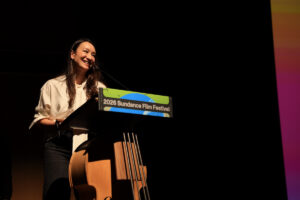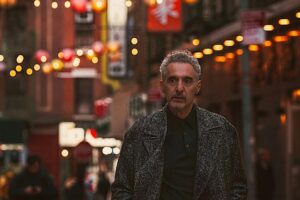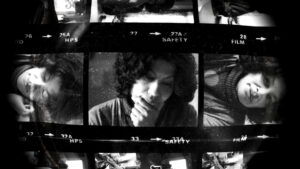




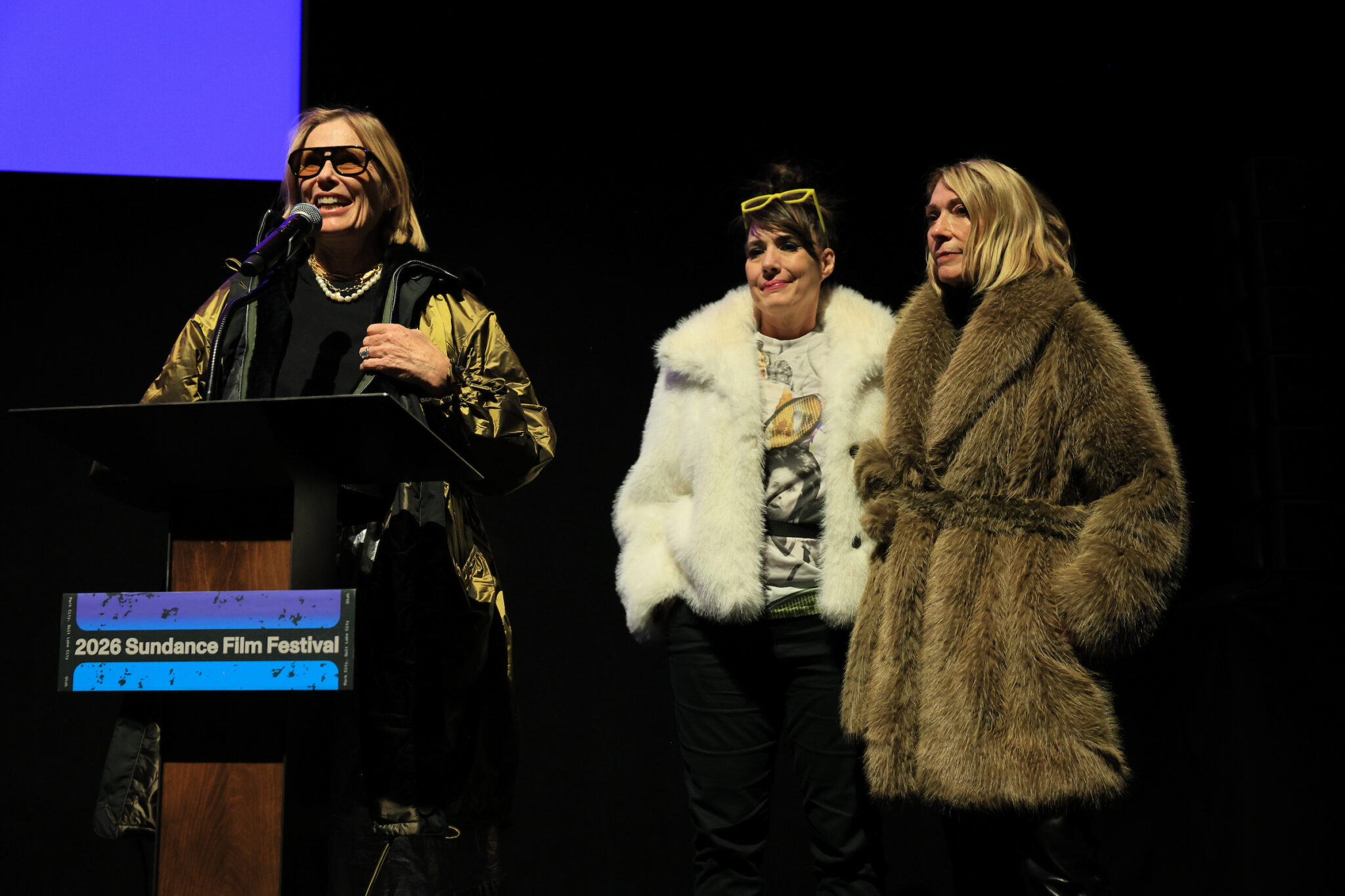
(L-R) Tamra Davis, Kim Gordon, and Kathleen Hanna attend the premiere of The Best Summer by Tamra Davis, an official selection of the 2026 Sundance Film Festival (© 2026 Sundance Institute | photo by Jemal Countess)
By Erik Adams
Kim Gordon has one thing she’d like the crowd at The Ray Theatre to take home from the premiere of The Best Summer: “It was such a different time,” the singer-songwriter and co-founder of Sonic Youth says before taking a pause. “Sorry you weren’t able to enjoy the ’90s.”
The 2026 Sundance Film Festival and its Midnight section almost weren’t able to enjoy The Best Summer. In a post-premiere Q&A, director Tamra Davis says the 8mm video cassettes containing the documentary’s concert and interview footage were moved three times during the Southern California wildfires of 2025. In order to view the tapes’ contents, Davis had to buy a camcorder. Once she did, she was amazed at what she found.
“I was looking at the little screen that pops out,” Davis says. “And I was like, ‘Oh, my God, I think I have this really precious, beautiful footage. It shouldn’t just be sitting in this box.’”
The director of Billy Madison and Jean-Michel Basquiat: The Radiant Child (2010 Sundance Film Festival) had dusted off a nearly forgotten chapter of alternative music history: a pair of concert tours that brought Beastie Boys, Foo Fighters, Sonic Youth, and other legendary acts to Australia and Southeast Asia at the end of 1995 and the start of 1996. Davis was newly married to Michael “Mike D” Diamond at the time (see: the very first verse of Beastie Boys’ ’94 LP Ill Communication), and as was customary for her road trips with Diamond, Adam “Ad-rock” Horovitz, and the late Adam “MCA” Yauch, she brought along her Sony Hi8.
“I would always be filming his band,” Davis says. “But on the tour, I also was friends with these guys,” she says, gesturing toward Gordon and their fellow Q&A panelist and The Best Summer participant, Kathleen Hanna. “They’re my favorite bands as well. I filmed them like a fan.”
Through a minimum of edits, Davis created a “you are there” sensation that runs through The Best Summer like an electrical current. The menacing clambor of Sonic Youth’s “Bull in the Heather” envelops The Ray; Beastie Boys’ stage-owning, mic-rocking charisma is in prime shape for a performance of “Posse in Effect.” Gordon notes that the color and the sound are remarkably sharp for something shot on consumer-grade equipment — these are surely some of the only home movies you’ll ever hear in Dolby Atmos.
“My band played at 2 o’clock on the dumpster stage,” Hanna says of the short straw Bikini Kill drew on Summersault, the tour that took her, Gordon, and Davis across Australia. In The Best Summer, however, “it looks like we were the most important band in the universe, because Tamra shot it.”
Hanna plays quasi-host for the first section of the documentary, asking the same two questions to Gordon, Pavement’s Stephen Malkmus, and Foo Fighters’ Dave Grohl: “What attracts you to being onstage?” and “Do you think your personality is different offstage than in real life?” Off-camera, Davis offers her own questionnaire to Yauch, an Amps-era Kim Deal, a baby-faced, mutton-chopped Beck, and others: “What’s your motto?,” “What’s your favorite color?,” “What’s your favorite food?,” “What book are you reading?,” and “Who’s your travel buddy?” Gordon’s answers are by far the most considered; asked at The Ray if there are any she’d change, she says they’d be “pretty much the same. Maybe more succinct.”
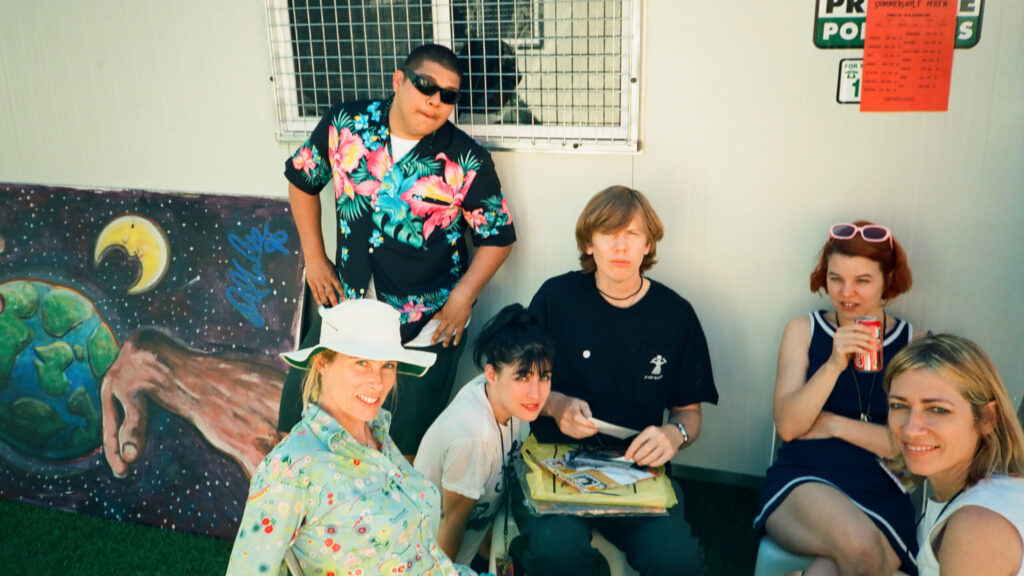
At the time, there was no greater plan for the footage. In the documentary, Hanna describes the interviews as a way to stave off boredom, and Davis suggests that maybe she’ll edit them together as a souvenir for everyone on the tour. Today, this candid backstage chatter presents a glimpse at a fascinating period in American culture, when the mingling of the mainstream and the underground formed odd, commercialized byproducts like MTV-sponsored package tours that took 120 Minutes staples to Indonesia, Singapore, and Thailand.
The Best Summer catches Beck in one of the last moments when he could so casually shoot the shit with a peer like Malkmus. In a few months’ time, he’d be wowing new listeners with the sun-bleached grooves of “Where It’s At,” allowing him to ditch the albatross of “Loser” and line-dance toward selling 2 million-plus copies of Odelay. In Grohl’s answers to Hanna’s questions, one can hear both reflection on his late Nirvana bandmate Kurt Cobain and a preview of Foo Fighters’ eventual ascent to stadium-rock status.
“It was a really bad time,” Hanna says of everything she and Bikini Kill left behind to join Summersault. “Everybody was losing people to AIDS and suicide and heroin. And we lived in the Northwest, and it was freezing cold, and we got invited to go on this tour where we got to stay in hotels instead [of] on people’s floors. We were like the cousin who was just psyched to be there.”
The events of The Best Summer had long-lasting positive effects for Hanna, too: It led to her marriage to Beastie Boys’ Horovitz. She says they consider the tour to be the start of their relationship, meaning they just celebrated their 30th anniversary. Thanks to Davis, the awkward first steps of that relationship have been preserved for posterity.
“When they see each other, she can’t even look at him,” Davis says of the Hanna-Horovitz moment in The Best Summer. “You see them falling in love. And it’s just the most beautiful thing.”
“I was trying to be a really serious interviewer or something — I don’t know what the hell I thought I was doing,” Hanna says. “And then when I got to Adam, I just couldn’t even get out the question at all.”
“It’s really weird to be like, ‘Oh, my God, somebody actually got that on camera’ — the moment when I was like, ‘I love that guy.’”