



One of the most exciting things about the Sundance Film Festival is having a front-row seat for the bright future of independent filmmaking. While we can learn a lot about the filmmakers from the 2026 Sundance Film Festival through the art that these storytellers share with us, there’s always more we can learn about them as people. We decided to get to the bottom of those artistic wells with our ongoing series: Give Me the Backstory!
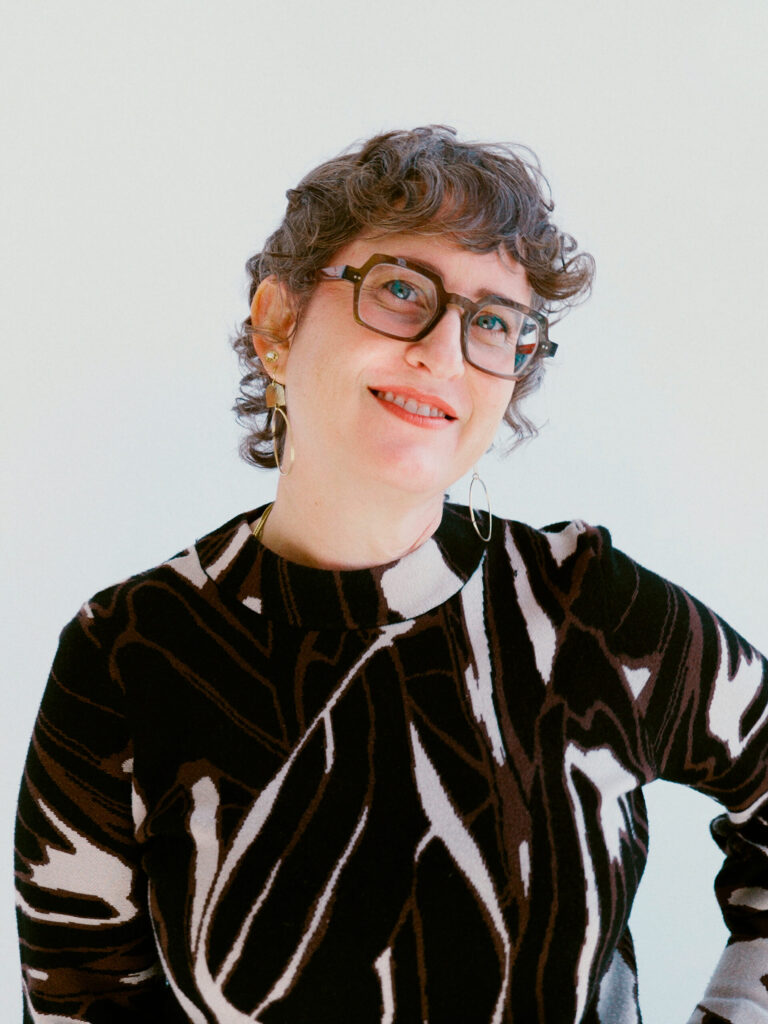
As a parent you’re always trying to find ways to connect — honestly and authentically — with your children. Usually that involves researching trends that they’re into or buying them the latest fad gift, but for filmmaker Alysa Nahmias, those requests look slightly different. “My tween kids asked me to please make a documentary they’d actually want to watch with their friends,” Nahmias recalls about the origins of her latest project. “Mom-challenge accepted.” The final product of that pre-teen challenge is the delightful Cookie Queens, which is its world premiere in the Premieres section of the 2026 Sundance Film Festival.
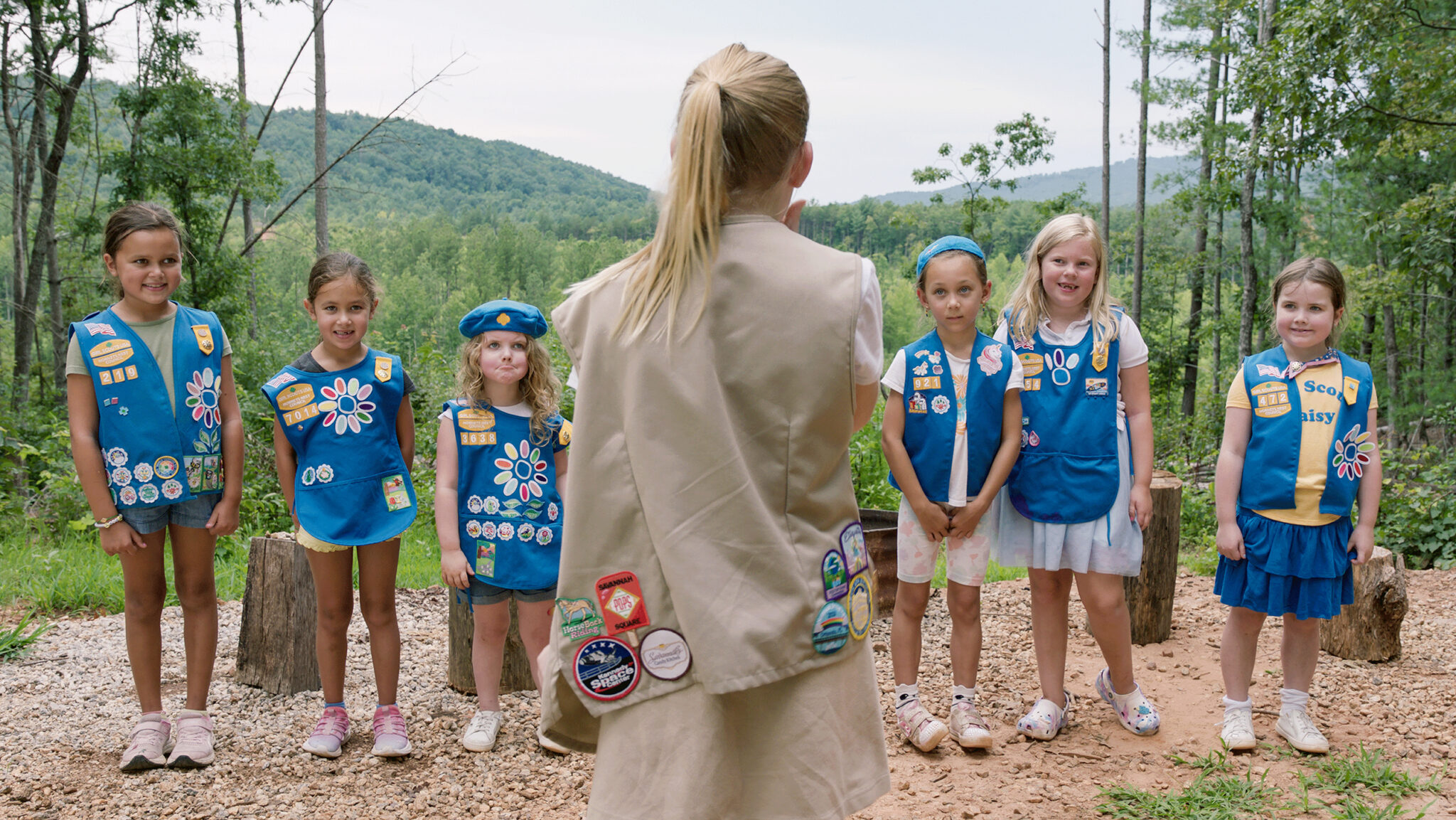
Following four ambitious girl scouts around the country during the highly competitive cookie selling season, Cookie Queens shines a light on what self-confidence, determination, and community means in this day and age. Nahmias and her dedicated crew capture a small slice of life for each of these girls and their families, reflecting back the dynamics and the care that we see in our own. The result is joyous and inspiring. It also might inspire you to pick up a few boxes of your favorite Girl Scout Cookie when you see your local troop next. “My freezer has several boxes of Thin Mints during Girl Scout Cookie season!” says the director, offering up tips for making Cookie Queens season last as long as possible.
Read on to learn about how this magical project came to life with challenges and surprises, why the story of these girls needs to be told now, and what Nahmias believes is the essential role of a director.
Films are lasting artistic legacies, what do you want yours to say?
Cookie Queens invites us into the beauty and complexity of contemporary girlhood. It represents how girls see themselves, which is often quite different from the assumptions others may have about them. Whether you’re still young or you’re looking back on youth, the Girl Scouts in this film are reminders of the preciousness of childhood and the importance of sisterhood and community. The story also questions what we teach kids — and especially girls — about their own value and their place in the economy and in the world.
A guiding light for me in making this film, which I hope comes through to viewers, is that girls’ successes, ambitions, and creative spirits are worth taking seriously, and not looked at as frivolous or silly. Young women are so much more than what they might seem, and their inner brilliance shouldn’t be underestimated.
Describe who you want this film to reach.
Cookie Queens is a film for whole families to watch together — sisters, brothers, parents, and grandparents — and then to talk about their own experiences in light of the film’s story. I hope the film inspires others to listen to the young women in their lives. They undoubtedly have a wealth of wisdom to offer.
At its heart, Cookie Queens is about much more than Girl Scout Cookies; it’s about growing up in a culture of commercialism, where at very young ages girls are confronted with deeply ingrained beliefs that cuteness sells, and that self-worth is tethered to achievements. Sisterhood and trust can help girls thrive despite these challenges.
Additionally, whether it’s Girl Scouts, club soccer, video gaming, or debate club, everyone has the experience of growing up and finding their passion. I’m interested to see how others relate their own lives to the stories of these Girl Scouts who have a very specific obsession.
Of course, I’m also excited for the film to be seen by the 50+ million Girl Scouts alumnae around the world who know what it’s like to sell cookies and what it’s like to grow up together with a troop of peers and mentors. I hope Girl Scouts will see some of their experiences represented authentically on screen in Cookie Queens.
Your favorite part of making the film? Memories from the process?
Getting to know the Girl Scouts who are featured in Cookie Queens — Nikki, Ara, Olive, and Shannon Elizabeth — along with their families and troops, has been such an honor and privilege. All of them are people who I genuinely wanted to spend time with, and whose inner motivations and struggles were as compelling as their cookie sales goals. They welcomed me and my team into their homes, introduced us to their besties, laid bare their emotional struggles and triumphs, and asked insightful questions at every step. Their trust, courage, and collaboration has brought such joy to my life over the past few years, and they’ve become true friends. I’m forever grateful they said yes to this delicious adventure!
The experience of seeing today’s America through the eyes of these children from various walks of life, and witnessing how their communities come together to support them, has been a balm for my heart during turbulent times in our country and on our planet. Their energy and determination — and their belief that we can do better — is infectious. After filming at a low-rider car show in Texas, an etiquette class in North Carolina, a farmer’s market in San Diego, and many other fun locations, I came to realize that everyone says they love Girl Scout Cookies, but it isn’t really the cookies which make our days brighter. It’s the kids.
What was a big challenge you faced while making Cookie Queens?
From the very beginning, my creative vision for Cookie Queens was to tell the story entirely in the present-tense, from the girls’ point of view, and without any interviews. I knew that the film would bring together Girl Scouts from different parts of the country into a single story.
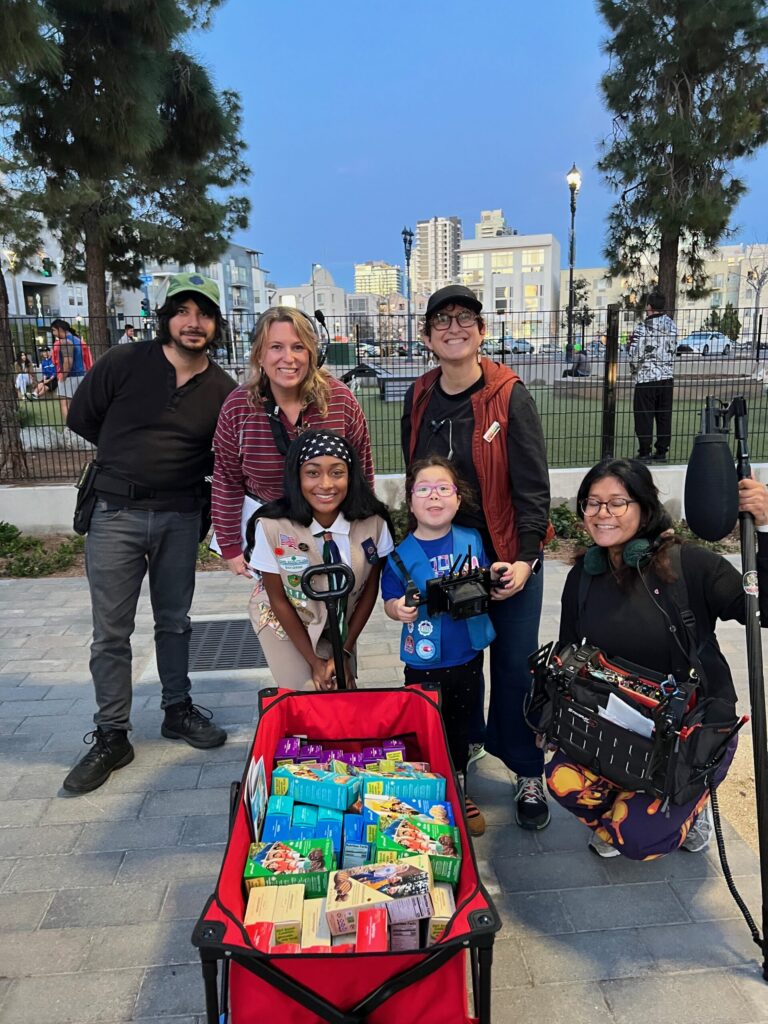
In order to create cohesive visuals and cultivate strong trust with the families, I needed to collaborate with the same crew for every shoot day. Criss-crossing the country, filming with the same four-person crew over a months-long cookie season — with kids involved — was no small feat. We had to remain flexible and attuned to the storylines as each Girl Scout’s goals shifted during the course of cookie season.
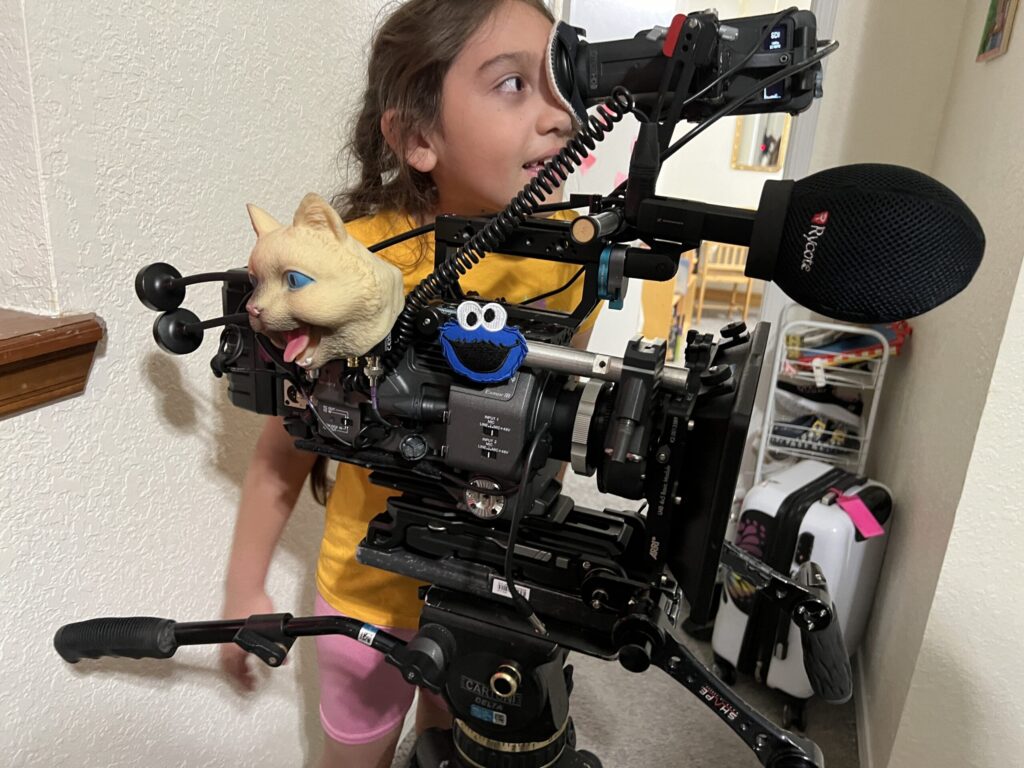
Creatively, we embraced the fact that the girls moved fluidly between imagination and reality. My cinematographer, Antonio Cisneros, did an impressive job of staying with them, flowing between their states of mind, with the camera consistently at their level. On top of that, the families in this film go all-out when it comes to cookie sales. It was legitimately difficult to keep up with them on a daily basis! Most days, our crew had to wrap before they were done selling. It was an endurance project for the whole team.
We all poured our whole hearts into the project, including during the edit to weave together a whole which is greater than the sum of parts. Editors Jeanne Applegate and Kim Roberts saw things in the footage that hadn’t been seen before, and their artistry created beauty and magic with every juxtaposition.
Why does this story need to be told now?
We are living through a time of seismic societal change with myriad forces tearing at the threads of culture, and our four cookie queens remind us how much we all have in common. They inspire hope for the future in polarized times. They come from different regions and life experiences, yet they share determination to succeed at their goals and to be actively engaged with their communities. Girls and women have often led the way toward positive social transformations, and we need their leadership now as much as ever.
At the same time, the film’s story poses a critical challenge for us to do better for young women. We must listen to them and take their ideas seriously. It’s important to ask ourselves how much is enough and to reconsider the daunting expectations that we place on girls. The structures of power and the economic conditions we live within can make it seem like inequality and competition are the only way this world can be organized. However, as we see in Cookie Queens, though children are taught the rules of the economy, they also naturally realize that those rules are not immutable. From an early age, girls question sexism, ableism, and all types of inequity. The film’s story asks us to consider how we might follow the next generation’s lead toward a brighter future.
Tell us why and how you got into filmmaking?
Somehow, even though I wrote stories, painted, and made short films as a kid, I never thought about filmmaking as a career. Perhaps it had something to do with how few women filmmakers were visible to me as a girl growing up in Tucson, Arizona, in that era. I ended up getting a degree in architecture and, while I was working at a large design studio after I graduated, I went on an exchange trip to Havana where a Cuban architect dared me to make a documentary about his utopian revolutionary architecture. That film, Unfinished Spaces (2011), which I co-directed over 10 years with my friend Ben Murray — in collaboration with an incredible team in Cuba — was a beautiful, challenging, and thrilling adventure. I felt both in my element and on my edge. At our world premiere, the immediate emotional response in a theater was overwhelming. I looked over at my extraordinary octogenarian film participants basking in a standing ovation during the end credits, all of our eyes teary, and I saw my future flash forward. There was no turning back from filmmaking, even if I’d wanted to.
Why is filmmaking important to you? Why is it important to the world?
Stories are not just about who we are; in a sense they define who we are. To tell stories together is to (re)build our world, and filmmaking can be such a visceral, emotional, and accessible way to share our truths and create new realities.
If you weren’t a filmmaker, what would you be doing?
I’d happily return to architecture; I still love space, material, and abstraction. Or, is there a way to get paid to put together puzzles? I do love puzzles. Come to think about it, maybe puzzles are a common denominator of the creative process of both documentary and architecture.
What is something that all filmmakers should keep in mind in order to become better cinematic storytellers?
As a director, it’s my responsibility and honor to allow each person I’m collaborating with to shine — whether that’s behind the camera or in front of it. It is my job to recognize and uplift brilliance and truth whenever they appear. In documentary filmmaking, it’s also vital to embrace surprises, improvisation, and even contradictions. I over-prepare, and then I often leave my notes in my pocket as I witness and react to what’s actually happening in the moment. As Lawrence Weschler, one of my favorite nonfiction writers, once said, “nothing is too wonderful to be true.”
Tell us about your history with Sundance Institute. When was the first time you engaged with us? Why did you want your film to premiere/screen with us?
My first feature documentary, Unfinished Spaces, was programmed in the 2012 Sundance Film Forward global festival initiative. My directing work was later supported by the 2019 Sundance Momentum Fellowship and Women at Sundance. In addition, I’ve produced or executive produced films that have premiered at the Sundance Film Festival, including Unrest and I Didn’t See You There. I’ve also stayed engaged with Sundance Institute over the years as a mentor for labs and workshops including the Documentary Producing Fellowship, the Women’s Financing Intensive, and Catalyst.
In 2019, I met my fellow Cookie Queens producers, Michael Dweck and Gregory Kershaw, at Sundance Catalyst when I was matched to be their producing advisor as they pitched their stunning documentary The Truffle Hunters. We became fast friends, with an eye toward collaborating on something special one day.
With Cookie Queens, that dream has come true, as it’s been an exciting creative journey for the three of us. What’s more, our first funding for the project was raised in the Sundance Catalyst community. I’m thrilled to come full circle with the world premiere of Cookie Queens at Sundance.
Who was the first person you told when you learned you got into the Sundance Film Festival?
I was driving my daughter to school when I got a text from Sundance Festival programmer Ania Trzebiatowska along the lines of “any chance we could chat quickly at some point today?” I turned to my daughter, who just a few minutes earlier had instructed me to keep quiet so she could get a few more minutes of precious sleep in the car, and I woke her up with, “It’s Sundance!! They might be inviting Cookie Queens to the Festival! Do you want to be in the car when I talk with them?” Immediately, I got a text back from Ania – “haha!” – and realized that my car had voice-texted to Ania verbatim. As my daughter and I cracked up, I pulled over to call Ania back. Ania was already laughing, too, when she started off the call with, “It seems like you already guessed that we love your film and want to invite you to premiere at Sundance!” My daughter got to listen to our whole joyful conversation. We were beaming! It was perfect that she was right there with me. When I dropped her off at school, she said it was ok to give her a hug in front of others on campus — a rare gift to the parent of a high school freshman.